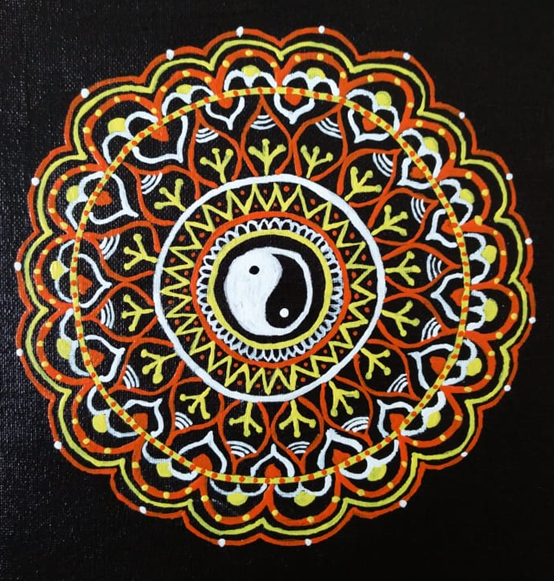
A “mandala” is a spiritual and ritual symbol in Hinduism and Buddhism, representing the universe. “Mandala” has become a generic term for any diagram, chart or geometric pattern that represents the cosmos metaphysically or symbolically: a microcosm of the universe. The design of the mandala is supposed to be visually appealing so as to absorb the mind in such a way that irritating thoughts are unable to get through and a spiritual essence surrounds the individual observing the mandala, which in turn allows the individual a higher consciousness or awareness, almost as though being hypnotized. This allows the busy mind to take a break while the creative mind is allowed to run free.
Buddhist monks from Tibet make sand mandalas meant to represent the world in a divine form: perfectly balanced and precisely designed. This is an extremely laborious and intricate process. When the mandala is finished, however long it takes for the monks to deal in this divine geometry of the heavens, they pray over it – and then they destroy it. The underlying message of the mandala ceremony is that nothing is permanent.



Great Paintings!
Awesome 😊👍