Who wouldn’t appreciate being liberated from domestic chores? With a bustling lifestyle, juggling between household chores and work, we always prefer things that make our lives easy-peasy.
With advancements in technology, we have automatons that are human-like and run based on artificial intelligence and IoT – all of which can be controlled at your fingertips via a mobile app.
Internet of Things (IoT): Is it going to flood our homes?
Centennials envisioned a smart future. Well, now machines are not merely dumb devices, rather they are astute creations that can work in tandem with human beings and future is not merely an imagination but a characteristic outcome of two most dynamic innovations of today – Artificial Intelligence (AI) and Internet of Things (IoT).
And before getting standard with the subject, it is very imperative to comprehend a couple of terminologies.
What is IoT?
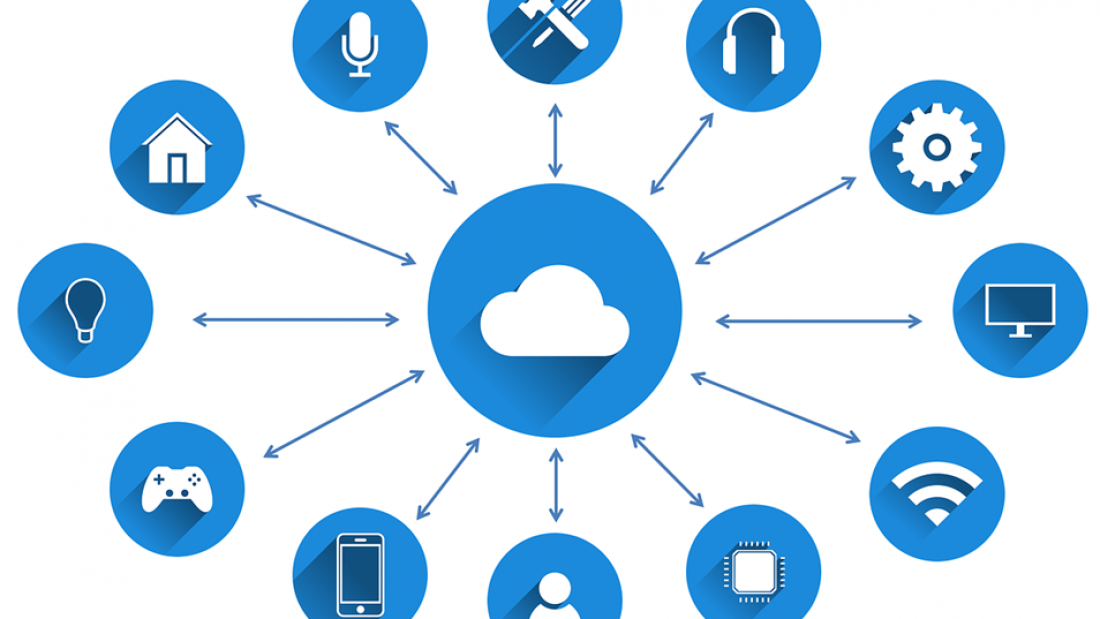
The Internet of Things (IoT) is the interconnection of computing gadgets (mechanical and advanced digital machines) involved in daily objects and empowering them to send and receive information by means of the Internet with a kind of unique identifiers (UIDs) without expecting man-to-man or man-to-computer interaction.
IoT can be better understood with M2M, i.e., machine to machine, machine to man, man to machine, and machine to mobile connections that are used for connecting the human beings, electrical and electronic devices, and various systems intelligently.
Artificial intelligence or simply AI:
Artificial intelligence (AI) is the recreation of human intelligence processes by machines, particularly computer frameworks. The process includes the acquisition of data and rules for utilizing them for learning, adapting rules to reach inexact or definite conclusions for reasoning and self-amendment, where specific applications of AI include expert systems, speech recognition, and machine vision.
For instance: (https://ai.google/)
AI makes life simpler for individuals to do everyday things, regardless of whether it is searching for photos of friends and family, breaking down language barriers with Google Translate, composing emails or getting things done on the go with Google Assistant. AI likewise provides better approaches for taking a gander at existing issues, from rethinking healthcare to advancing scientific discovery.
Machine learning or ML:
ML can automate and improvise the learning process of computers based on past experiences without any human interference. The process starts with feeding good quality data and training machines (computers) by building machine learning models using data and different algorithms.
Machine learning is a subset of AI, where all machine learning counts as AI, but not all AI counts as machine learning. For instance, symbolic logic – rules engines, expert systems, and knowledge graphs – all of which could be described as AI, and none of them are machine learning.
AI and IoT:
Artificial Intelligence and the Internet of Things is like a match made in Tech Heaven or should we call them Bonnie and Clyde of Tech-world?!
AI being a ubiquitous innovation has an imperative role to play in the revolution of developing advancements. Particularly, when IoT is in its progressive phase, its amalgamation with AI can transform the future technological landscape.
While both AI and IoT disciplines have singular worth, their true potential can only be acknowledged together. There are wide ranges of applications over multiple industries that require Artificial Intelligence and the Internet of Things.
Home Smart Home:
Home automation or domotics or Smart homes include internet-connected devices that empower remote monitoring and executive appliances and systems, i.e., lighting and heating.
The recent advancements by companies like Amazon, Apple and Google include their own smart home products and domotics platforms, including Amazon Echo, Alexa, Apple HomeKit and Google Home.
You can now say bye-bye to your “kaam-wali bai” and say hello to “smart-bai”. And a bonus for installing these “smart-bai’s” is that they don’t complain and only involve initial investments.
Here’s how IoT can help you with all the household chores:
• Automated vacuum cleaner – iRobot Roomba when everything else is becoming smart, why not a smart vacuum cleaner? The iRobot Roomba can clean a room as efficiently as possible with the use of a set of sensors that detect impurities, dirty spots on the floor or even clean steep drops including the stairs. They resemble flying saucers and can be connected to a smartphone app and adjust the performance requirements with different modes.
• Smart TVs interface with the web to access content through applications, such as on-demand video and music. Some smart TVs likewise incorporate voice or signal recognition.
• Notwithstanding having the option to be controlled remotely and customized, the smart lighting system can distinguish when occupants are in the room and modify lighting as required. For example, Hue from Philips Lighting Holding B.V. Smart lights can likewise manage themselves dependent on sunlight availability.
• Smart thermostats and air-conditioning, such as Nest from Nest Labs Inc., come with integrated Wi-Fi, allowing users to schedule, monitor and remotely control house temperatures. These devices also learn homeowners’ behaviors and automatically modify settings to provide residents with maximum comfort and efficiency. Smart thermostats can also report energy use and remind users to change filters, among other things.
• Utilizing smart locks and garage entryway openers, users can concede or deny access to visitors. Smart locks can likewise recognize when residents approach and unlock the entryways for them.
• Security is not a problem anymore with smart surveillance cameras, residents can monitor their homes when they are away or on an extended get-away. Smart motion sensors can recognize the difference between residents, visitors, pets and burglars and can notify authorities if suspicious conduct is detected.
• Pet care can be automated with connected automated feeders and your furry friends can be fed timely with the preset quantity of food.
• The garden irrigation system can easily activate or deactivate based on IoT technology that utilizes sensors to find out whether the soil is too dry or if it is in need of some irrigation and can automatically activate irrigation system.
• The IoT-enabled alarm clock would reset itself based on required factors and calculate when it needs to wake you up so you’re not late and IoT-enabled alarm clock can even sync with the smart coffee maker that can brew you a fresh cup as soon as your alarm goes off.
• Smart refrigerators keep track of expiration dates, make shopping lists or even create recipes based on ingredients currently on hand. And in-built cameras also allow you to have a look at the stuff you have stored from anywhere, and this feature especially helps you during your grocery shopping and you can only buy stuff that you are in need of.
• Household system monitors may, for example, sense an electric surge and turn off appliances or sense water failures or freezing pipes and turn off the water so it isn’t flooded.
• Smartwatch – if you are a fan of mobility and ease of use, there is nothing better than a smartwatch to keep you “connected”. Be it an Iwatch by Apple or Fitbit. The usage benefits are enormous. It allows you to access your messages, emails, music, social media, maps and trackers on the go. They are especially helpful when the circumstances aren’t feasible to carry a phone in your hand.
Some other applications include:
1. Collaborative Robots
Ever needed the assistance of a robot? Indeed, that is actually what you will get with Collaborative Robots or Cobots. These Cobots are exceptionally perplexing machines that are intended to help people in a mutual workspace with situations extending from office to modern. They can be a robot arm intended to perform tasks or even complex robots intended to satisfy intense errands.
2. Drones
Drones are the aircraft that fly without a human pilot (The piloting is done by the software!). They are amazingly useful as they can navigate obscure surroundings (even those past the range of the web) and reach areas hazardous for humans such as seaward operations, mines, combat zones (Like in Jack Ryan – if you follow the series) or burning buildings.
3. Smart Cities
When everything is getting smart, why not urban areas? Smart cities can be created with a network of sensors that are connected to physical city infrastructure. These sensors can be utilized to screen the city for various civic factors such as energy efficiency, air contamination, water use, noise pollution, traffic conditions and so on.
4. Smart Eye
These are like devices straight from the Iron Man movies! Smart eye technology is Google’s most ambitious project – the Glass. This technology is equipped with sensors and connectivity options from Wi-Fi to Bluetooth to provide numerous options and accessibility features right in front of your eye but without causing a distraction. You can open maps, read emails or messages, surf the web, capture moments and do more with these futuristic glasses.
5. Google Contact Lens
The lens includes a wireless chip and a miniaturized glucose sensor. A tiny pinhole in the lens allows for tear fluid to seep into the sensor to measure blood sugar levels. I mean how cool is that?!
Real-World Examples
Although Artificial Intelligence in the Internet of Things is a relatively new concept, it has already been successfully applied in many real-world applications. Yeah, this world is more tech-savvy than you thought!
Tesla Motors – Self Driving Cars: The real-life Sci-fi hero Elon Musk has made an effort to make futuristic science-fiction a very much part of today’s reality with self-driven cars. Tesla Motors’ self-driving cars adopt the latest advancements in AI and IoT. While these cars are still in the testing phase, they are still one of the astounding innovations of IoT.
A unique feature of the Tesla self-driving cars is that all of them act like a connected network. Whenever one car learns some new information, it is passed on to all the other cars. And that is used to predict the behavior of cars and pedestrians on the road in various circumstances.
WildTrack – Endangered Species Preservation: There are many animals that are endangered or going extinct in various countries (No thanks to humans of course!). Also, the traditional methods of tracking these animals with collars are stressful and dangerous (Both to the animals and researchers). So WildTrack’s footprint identification technique (FIT) uses IoT and AI algorithms to identify the species, individual, age and gender of an animal from its unique footprint. Then this data can be used to recognize patterns relating to animal movements, species population, etc. that help in preserving various endangered species.
Hope, you enjoyed reading these enthralling information about the tech-advancements coming from a Biotechnologist who is equally tech-savy!;)